
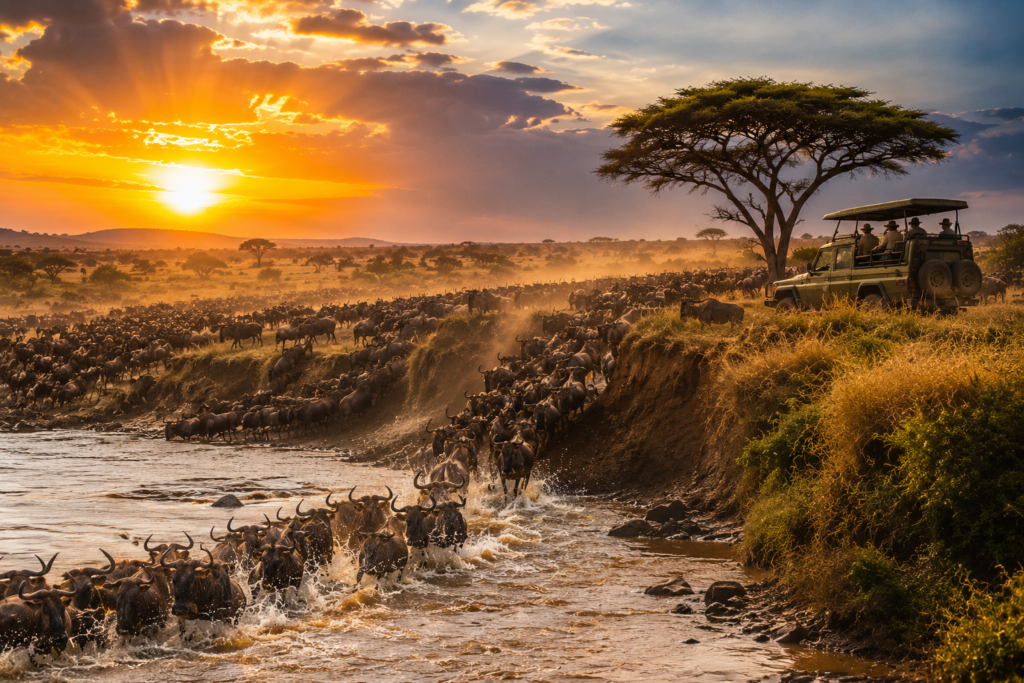
So you’re dreaming of the Masai Mara — the golden savannahs, the Big Five, maybe even a front-row seat to one of nature’s greatest spectacles. But here’s the thing: the best time to visit Masai Mara depends entirely on what you want to see, what you’re willing to spend, and how you feel about a little rain. The Mara is stunning year-round, but each month brings a different flavour of magic. Let’s break it all down so you can pick the perfect window for your 2026 safari with Eminent Safaris.
Understanding Masai Mara Weather and Seasons
Before we dive into the month-by-month breakdown, let’s get the lay of the land. The Masai Mara sits at an elevation of about 1,500 metres, which keeps temperatures pleasantly moderate — think 15°C to 28°C year-round. The Masai Mara weather follows two main patterns:
- Dry Season (June–October & January–February): Clear skies, shorter grass, and animals congregating around water sources. This is prime game-viewing time.
- Wet Season (March–May & November–December): Lush green landscapes, newborn animals, fewer tourists, and lower prices. Rain usually falls in short afternoon bursts — not all-day downpours.
Now, here’s a secret most guides won’t tell you: there’s no truly “bad” time to visit the Mara. Even during the rains, game drives happen, and the landscape is absolutely breathtaking. But if you want specific experiences — like the Great Migration — timing matters.
Month-by-Month Guide to the Masai Mara in 2026
January & February — The Quiet Dry Season
January and February are the Mara’s other dry season, and they’re a well-kept secret. The skies are clear, the grass is relatively short from the December rains drying up, and predator action is excellent. Lions, cheetahs, and leopards are active, and without the Great Migration crowds, you might have entire sightings to yourself.
Wildlife highlights: Predator-prey interactions are at their peak. Resident herds of zebra, topi, and gazelle stick around, and big cats are busy hunting. Bird diversity remains strong with migratory species still present.
What to pack: Light layers, sunscreen, a hat, and sunglasses. Mornings can be cool (around 14°C), but afternoons warm up to 27°C. Bring a light rain jacket just in case — the odd shower isn’t unheard of.
Photography tip: The golden light during these months is exceptional. With fewer vehicles on the reserve, you’ll get cleaner compositions and more intimate wildlife moments.
March, April & May — The Long Rains (Green Season)
This is the Mara’s “green season,” and it’s not for everyone — but it might be for you. March starts with occasional showers, April sees the heaviest rainfall, and May begins to taper off. The landscape transforms into a lush, emerald paradise.
Wildlife highlights: Many herbivores give birth during this period, which means adorable baby animals everywhere — and predators on the hunt for easy meals. The drama is real. Birdwatching is also phenomenal, with over 450 species recorded in the Mara ecosystem.
What to pack: Waterproof layers are essential. Good rain jacket, waterproof bag for camera gear, and sturdy shoes that can handle muddy terrain. Roads can get challenging, so 4×4 game drive vehicles are a must (don’t worry — our Mara safaris always use proper 4x4s).
Budget tip: This is the cheapest time to visit. Camp and lodge rates drop significantly, sometimes by 30-40%. If you’re looking for an affordable Kenya safari, the green season is your golden ticket.
June — The Calm Before the Storm
June marks the start of the dry season and the beginning of the buzz. The rains have stopped, the grass is still green but starting to shorten, and the Mara is gearing up for its main event. Early herds of wildebeest and zebra from the Serengeti may start arriving in the southern Mara by late June.
Wildlife highlights: Resident wildlife is abundant. Elephants, buffalo, and giraffes are easy to spot. The big cats are active, and if you’re lucky, you might catch the first wave of migration herds crossing into Kenya.
What to pack: Layered clothing — mornings are chilly (12-15°C), afternoons pleasant (24-26°C). Binoculars are essential for scanning the horizon for incoming herds.
July & August — The Great Migration Arrives
This is it — the main event. The best time to visit Masai Mara for the Great Wildebeest Migration is July through August. Over 1.5 million wildebeest, along with hundreds of thousands of zebra and gazelle, pour across the Mara River in one of nature’s most dramatic spectacles.
Great Migration timing: The herds typically start crossing the Mara River from mid-July. The river crossings are the most photographed moments — thousands of animals plunging into crocodile-infested waters in a chaotic, heart-pounding rush. But the timing isn’t exact. Nature doesn’t follow a calendar, and some years the herds arrive earlier or later.
Wildlife highlights: Beyond the migration, predators are in overdrive. Nile crocodiles feast at the river crossings, lions ambush exhausted herds, and hyenas patrol the edges. It’s raw, unfiltered nature at its most intense.
What to pack: Warm fleece for early morning drives (it can drop to 10°C), camera with a zoom lens (at least 200mm), and patience. River crossings can involve hours of waiting — but when they happen, it’s unforgettable.
Photography tip: Position yourself at key crossing points like the Mara River’s “crossing hotspots” — your guide will know the best ones. Use burst mode and pre-focus on the riverbank. The dust, the splashing, the drama — it’s a photographer’s dream.
Important note: July and August are peak season. Book well in advance — camps and lodges fill up months ahead. Eminent Safaris offers flexible installment payment plans so you can lock in your spot early without paying everything upfront.
September & October — Peak Migration & River Crossings
September and October continue the migration magic. The herds are fully spread across the Mara, and river crossings continue — sometimes multiple times a day as different groups move back and forth. October is often considered the sweet spot: migration is still active, but the initial rush of tourists from July-August has thinned out slightly.
Wildlife highlights: The Mara is absolutely teeming with life. Predator-prey encounters are a daily occurrence. Vultures, marabou storks, and eagles circle above. The sheer density of animals is mind-blowing.
What to pack: Similar to July-August — layers, good optics, and camera gear. October can see the odd shower as the short rains approach, so a light waterproof layer is wise.
Photography tip: October’s softer light and slightly greener landscape offer a different aesthetic from the dry, dusty drama of August. Both are stunning — just different moods.
November & December — The Short Rains
The short rains arrive in November, and by December, the Mara has transformed again. The migration herds have largely moved back south toward the Serengeti, but resident wildlife remains. This is another budget-friendly window, and the landscape is gorgeous — fresh greens contrasting with dramatic cloudy skies.
Wildlife highlights: Resident herds stay. Predators remain active. Many animals are in excellent condition after months of abundant grazing. The Mara’s famous black-maned lions are always present.
What to pack: Rain gear is essential. Light layers, waterproof camera bag, and quick-dry clothing. December starts to dry out toward the end of the month.
Best Months for Photography in the Masai Mara
If photography is your primary goal, here’s the quick ranking:
- Best overall: July–September (migration action, dramatic river crossings, golden light)
- Best for landscapes: March–May (lush greens, dramatic storm clouds)
- Best for predators: January–February (active hunts, fewer tourists, clean compositions)
- Best for birds: November–April (migratory species present, 450+ species)
Wildlife Highlights by Season at a Glance
- Big Five year-round: Lion, leopard, elephant, buffalo, and rhino are all resident in the Mara — you can see them any month.
- Great Migration: July–October (river crossings peak July–September)
- Baby animals: February–April (calving season for many species)
- Bird migration: November–April (European migrants join 450+ resident species)
- Predator action: Year-round, but especially January–February and July–October
How to Choose Your Perfect Masai Mara Timing
Still not sure? Here’s a simple decision framework:
- Want the Great Migration? → July to October. Book early.
- On a budget? → March to May or November. Lower rates, fewer crowds, incredible scenery.
- First-time safari? → June or October. Good weather, great wildlife, slightly less crowded than peak.
- Serious photographer? → August for migration drama, January for predator intimacy.
- Hate crowds? → January–February or November. Quieter, still excellent game viewing.
No matter when you go, the Masai Mara delivers. It’s one of the few places on Earth where the wildlife experience is genuinely world-class in every season.
Plan Your Masai Mara Safari with Eminent Safaris
Now that you know the best time to visit Masai Mara in 2026, the only question left is: when are you going? At Eminent Safaris, we’ve been guiding travellers through the Mara for years. We know the best camps for each season, the guides who find the leopards, and the crossing points where the magic happens.
And here’s something our competitors don’t offer: flexible installment payment plans. You can secure your dream Mara safari today and spread the cost over months — no need to save up the full amount before you book. It’s how we make world-class safaris accessible to everyone.
Ready to start planning?
👉 Explore Our Masai Mara Safari Packages
Or reach out directly — we love talking Mara:
Your Mara moment is waiting. Let’s make it happen.